


Key Takeaways
- No two dementia journeys look the same, but stages can help families plan ahead.
- Early signs are often mistaken for normal aging.
- The middle stage is often when memory care becomes worth exploring.
- The late stage is about comfort, connection, and quality of life.
- Caregiver support matters just as much as the care itself.
What Families Need to Know About Dementia
When someone you love starts forgetting names, losing track of conversations, or seeming a little more withdrawn, it’s easy to brush it off. Maybe they’re just tired. Maybe it’s stress. But when those moments start adding up, questions begin to surface, and with them, a mix of worry and uncertainty that can feel overwhelming. Juniper Village at Aurora understands how much weight families carry during this time, and you don’t have to navigate it alone.
Knowing what to expect as dementia progresses can help you show up for your loved one at every stage, not just react when things get harder. This guide walks through what each stage can look like, how to support your loved one through it, and how senior living and memory care communities can play a meaningful role along the way.
What Dementia Progression Actually Looks Like
No two people experience dementia the same way. Timelines vary widely, and changes can happen gradually or feel sudden. That said, understanding the general stages gives families a roadmap, so fewer moments catch you completely off guard.
Early signs are often easy to miss because they can look a lot like typical aging. A forgotten word here, a missed appointment there. Knowing what to watch for helps you act sooner, and acting sooner opens more doors for planning and connection. You can also explore early signs of Alzheimer’s and dementia to feel more prepared before changes become harder to ignore.
The Early Stage: Still Independent, but Changes Are Coming
What You Might Notice
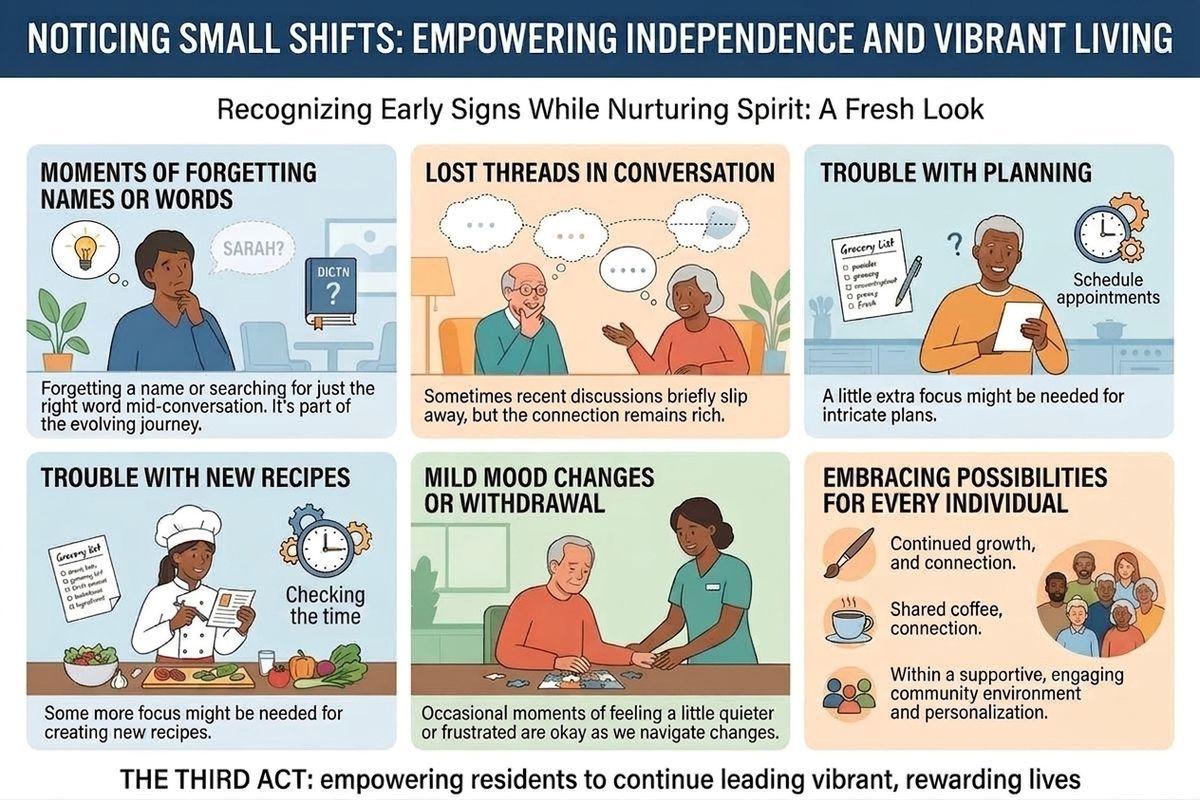
In the early stage, your loved one may still be living independently and managing most of their daily life. But small shifts can start to surface. Forgetting names, losing track of recent conversations, or struggling to find the right word mid-sentence are common early signs.
You might also notice some trouble with planning, like following a recipe that used to be second nature or keeping track of appointments. Mild mood changes, a little withdrawal, or moments of quiet frustration can show up too. There are 10 early warning signs of Alzheimer’s that can help you tell the difference between normal aging and something worth looking into.
How to Support at This Stage
This is the time to have the conversations that feel too early. Talk openly about future care preferences while your loved one can still share their wishes. Get legal and financial plans in place together, so decisions reflect their voice.
Keeping routines familiar and predictable can also bring a lot of comfort. And whenever possible, involve your loved one in their own care decisions. This stage is still about living fully, and that means honoring their independence along the way.
The Middle Stage: When Daily Life Needs More Support
Shifts That Become Hard to Miss
The middle stage tends to bring more noticeable changes. Confusion about time and place becomes more frequent. Your loved one may not always recognize familiar faces or may struggle to follow along in conversations they once led.
Sleep patterns may shift, and behaviors like wandering or mood swings can become part of the day. Help with dressing, hygiene, and meals may move from occasional to regular. This is often when the weight of caregiving starts to feel heavier for families.
When Memory Care Becomes Worth Exploring
Around-the-clock support can become genuinely difficult to manage at home, and that’s not a reflection of your love. It’s just reality. Memory care communities are designed specifically for this stage, offering structured days, social connection, and a warm environment where your loved one can feel settled and safe.
At Juniper Village at Aurora, memory care programs adapt to each person’s own rhythm and preferences. The goal isn’t to fit someone into a schedule. It’s to build a day that feels familiar, engaging, and genuinely theirs.
The Late Stage: Comfort, Connection, and Quality of Life
In the late stage, verbal communication often fades. But connection doesn’t. Touch, presence, and familiar sounds, like a favorite song from decades ago, can still reach your loved one in meaningful ways. Sensory comfort and gentle routine carry real weight at this stage. Sensory-friendly design in memory care is a thoughtful way communities help residents feel calm and at home.
Full-time care becomes both a practical and emotional reality. Families often find that having a dedicated, compassionate care team allows them to step back into the role of son, daughter, or spouse, rather than primary caregiver. That shift can bring its own kind of relief.
How Families Can Prepare for Each Stage
Practical Steps Worth Taking Early
Research senior living and memory care options before you need them. Touring communities, asking questions, and learning what different levels of care look like can make future decisions feel less rushed and more grounded. Exploring financial solutions for memory care early on can also take some of the pressure off when it comes time to decide.
Build a support network now. Caregiving is not a solo act, and the families who do it well tend to be the ones who ask for help before they reach their limit.
Take Care of Yourself Along the Way
Caregiver burnout is real, and it can sneak up quietly. Respite care gives you a chance to rest and recharge without leaving your loved one without support. Staying connected to community, whether through a support group or simply a friend who listens, matters more than it might seem.
At Juniper Village at Aurora, the door is always open, whether you’re ready to explore memory care options or just need someone to talk to. Reach out to the team and take the next step at whatever pace feels right for your family. Your third act, and your loved one’s, is still very much in motion.